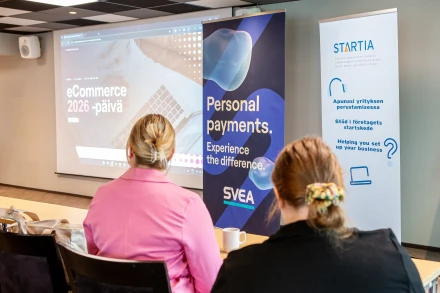
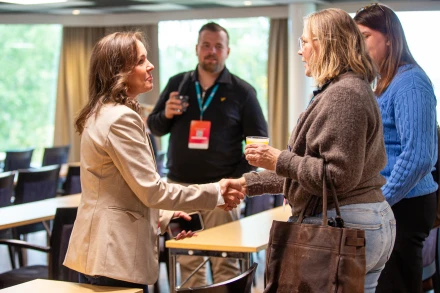
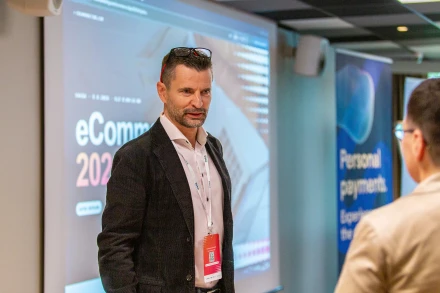
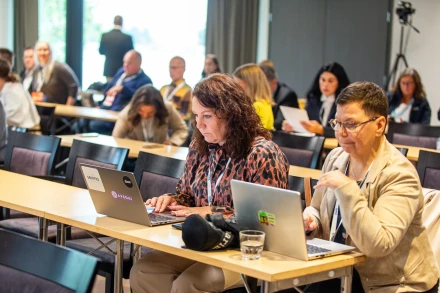
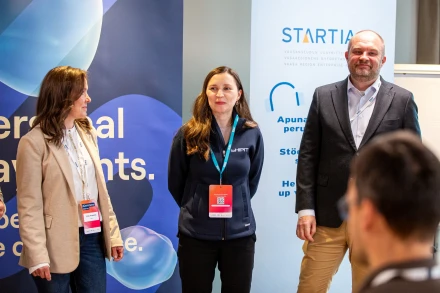
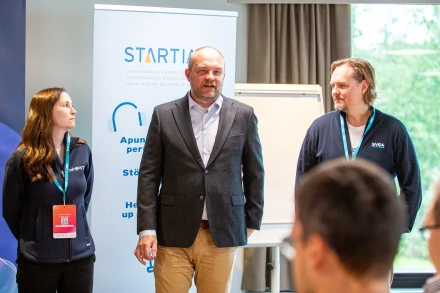
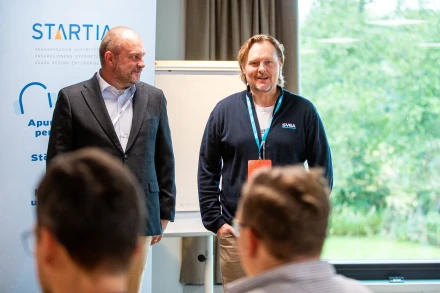
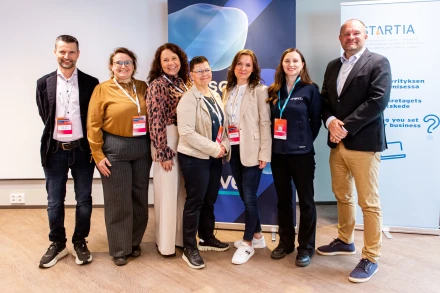
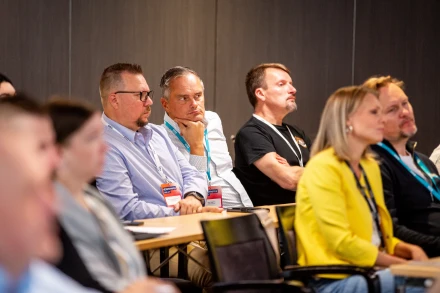
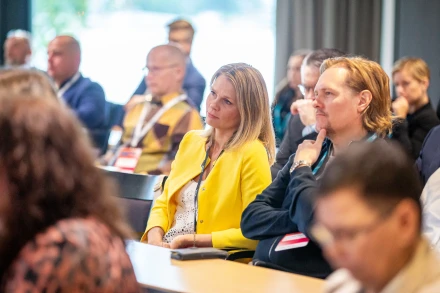
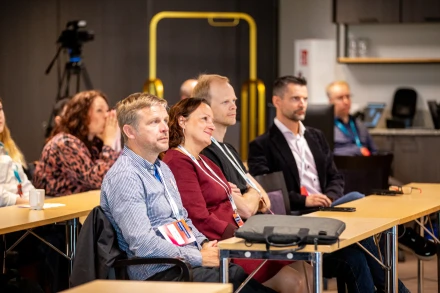
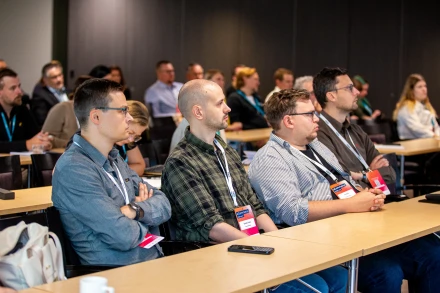
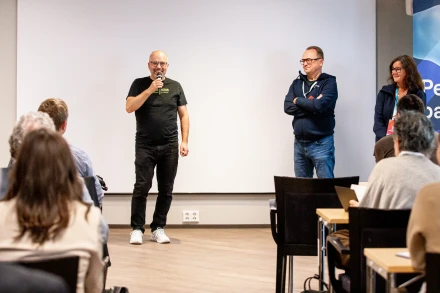
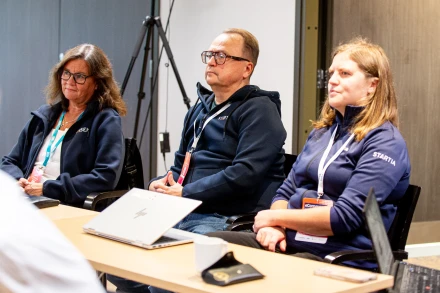
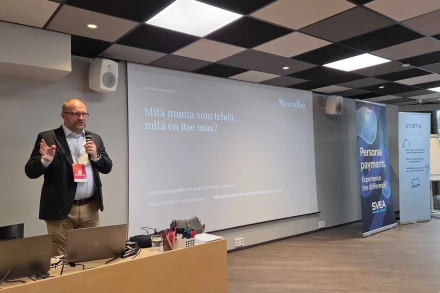
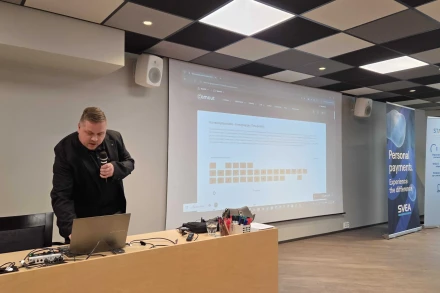
Three themes emerged from the day's talks: payments, a company's own data, and the responsible use of AI.
Consumers are taking longer than before to decide on purchases, e-commerce professionals heard at E-commerce Day — meaning every detail that supports a sale now carries more weight. The programme featured seven presentations, a panel discussion and a workshop for the audience, covering payment methods and the purchase journey, analysing a webshop's own data, logistics, AI governance, using AI in a small business, the role of content in visibility, and how AI is changing the way people search for and buy products online. Kalle Smeds of Creamarketing hosted the day and closed it with a talk on that last topic.
According to Svea's research, the lack of a suitable payment method is the second most common reason a purchase is abandoned. A webshop can also lose a customer simply because delivery costs weren't disclosed in advance. And although AI is available to everyone, a company's own customer, order and product data is its real competitive advantage. As buying increasingly starts with a conversation with an AI assistant, product information needs to be clear enough for AI itself to understand it. Behind both of these lies trust — and the fact that responsibility always stays with people, not AI.
Below are the key takeaways from each talk, in programme order. The event was streamed on YouTube, and the recording can be watched afterwards: https://www.youtube.com/watch?v=nAAAgLH6bK8.
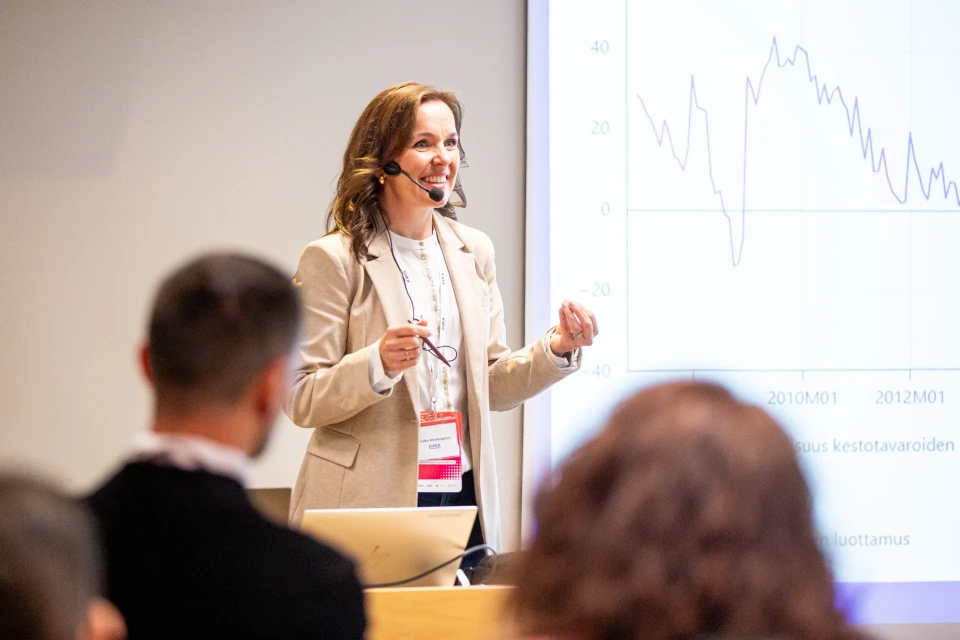
Payment solutions as part of a successful purchase journey
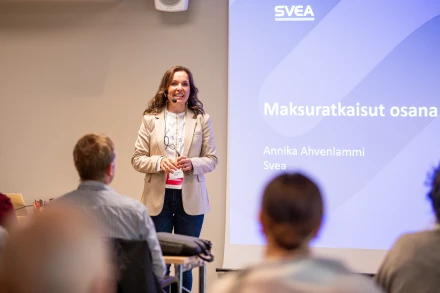
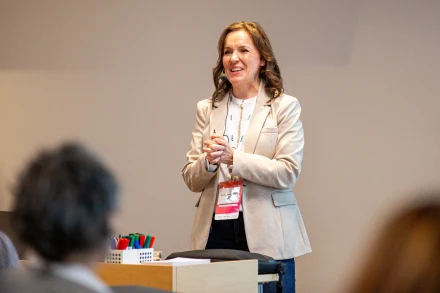
- Annika Ahvenlammi, Senior Sales Manager, Svea Finland
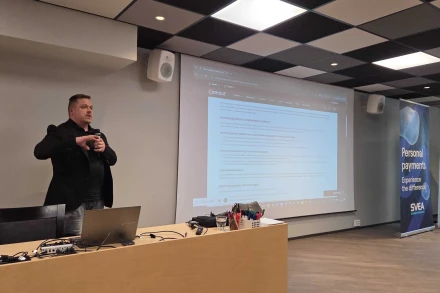
Ahvenlammi said online stores put a lot of effort into marketing but often forget about payment. According to Svea's Payment in the Nordics study, the lack of a suitable payment method is the second most common reason a purchase is abandoned. Consumers rank reliability and security as the most important factors in payment. Instalment payments become clearly more important once the basket exceeds around €80, and play a surprisingly large role at €200 and above.
She recommended highlighting payment options already on the front page and product pages. Checkout should offer at least bank buttons, mobile payments, invoice, business invoice and instalments. "A purchase decision is always a feeling," she said, urging retailers to thank customers after a purchase.
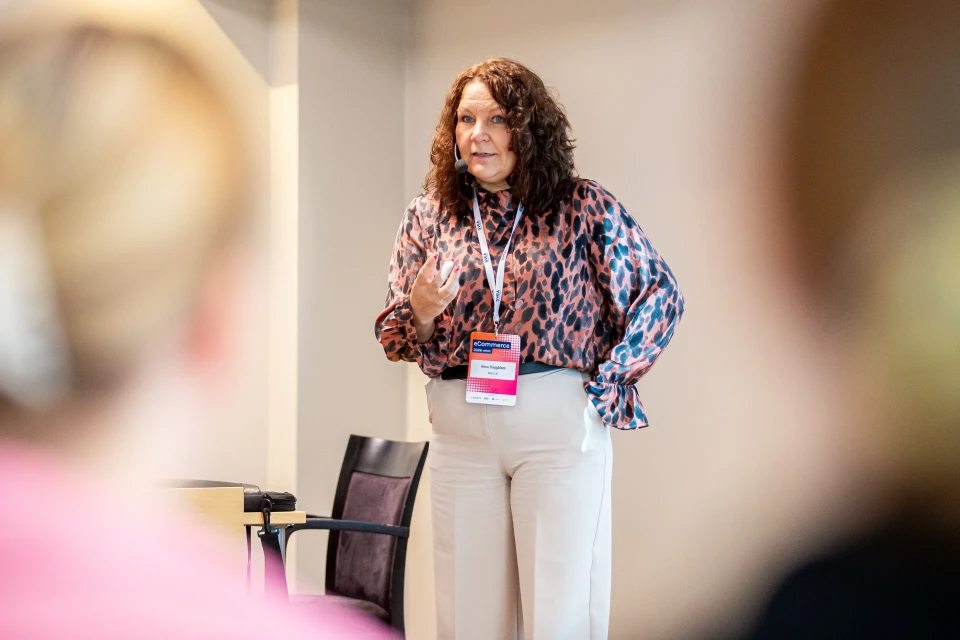
How AI makes webshop analytics understandable
- Anna Häggblom, CEO, Aveo AI
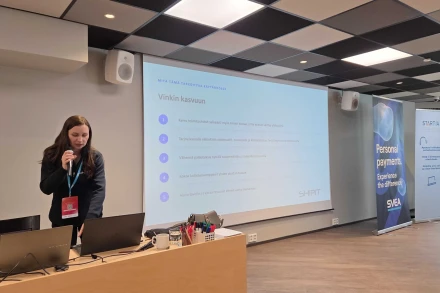
Häggblom showed how combining her webshop's own data — over 10,000 orders spanning roughly three years — with open data from Statistics Finland can produce useful insights. The analysis was done with AI. Work that would once have taken months was finished quickly and cost around €20–30.
Among new customers who ordered wallpaper samples, the average purchase rate was 14.3%, but in Raseborg only one of 38 sample orders led to a purchase (2.6%) — a sample size Häggblom herself flagged as small. Customer density was clearly higher in areas dominated by detached houses. "If everyone bought from us the way Finland's Swedish speakers do, our revenue would be 2.7 times bigger," she said. The analysis also showed that typical order sizes vary by product, suggesting stock levels should be set per product rather than uniformly. She encouraged small business owners to make use of their own data: GDPR doesn't prevent it, but data shouldn't be used to train AI models, and unnecessary personal details should be left out.
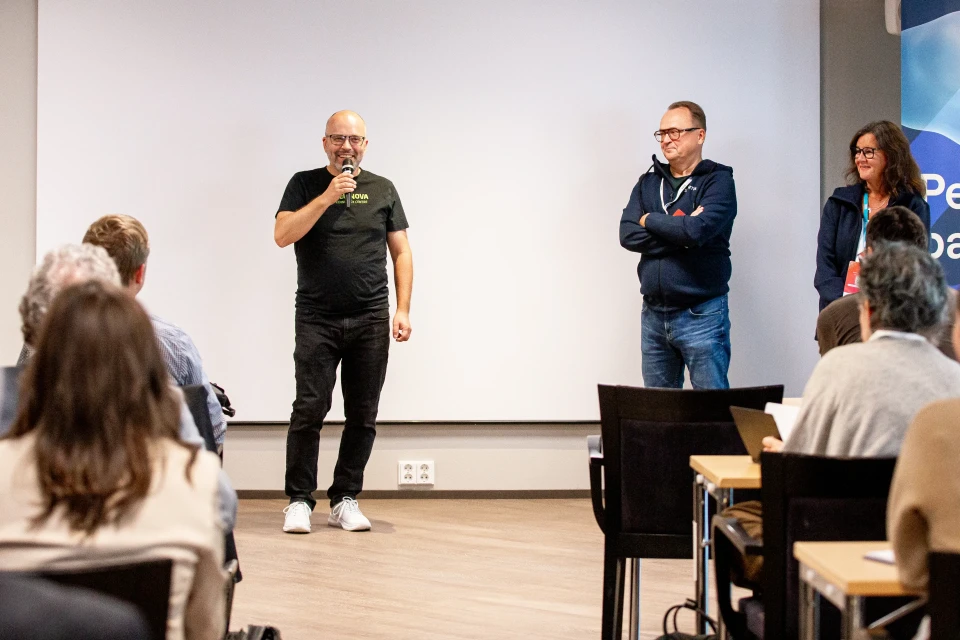
Merinova and Startia: support for entrepreneurs
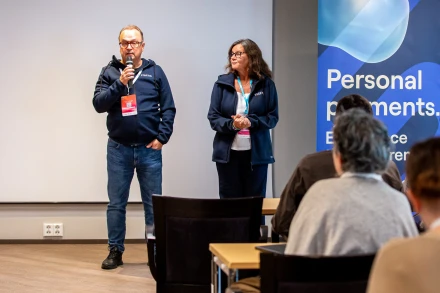
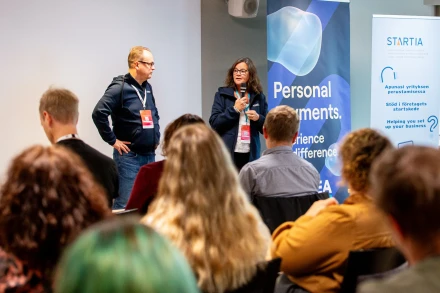
Tommi Virkama of Startia said the business-startup centre helps founding entrepreneurs. Around 550–600 new business ideas emerge in the Vaasa region every year, of which a good couple hundred lead to a company actually being founded with Startia's help. Tuija Räihä-Pundars of Vasek talked about growth, internationalisation and financing services, as well as ownership transfers.
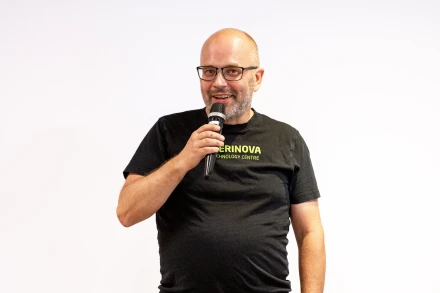
Merinova's Peter Hellström presented the technology centre's AI and cybersecurity project, as part of which the event was also streamed to YouTube.
Panel discussion: AI, agentic buying and responsibility
In a panel led by Kalle Smeds, the discussion centred on whether AI is genuinely useful or mostly hype. Key takeaways:
- Start with the "deep-sigh" tasks. Charlotta of Aveo AI said one of the first tasks they gave their AI agent was handling customer complaints.
- Keep a log of your AI tools. According to Mari Lintula, a company needs to know which tools are in use and what data goes into them. Charlotta added that the list should be reviewed at least once a year.
- Humans stay accountable. Several panellists, including Mari Lintula and Andreas Ögård, stressed that responsibility rests with the entrepreneur, not the AI.
- Agentic buying is growing. Searching for and comparing products with AI is already routine. The final step — actually buying and paying on your behalf — requires trust and is moving more slowly.
- Payment ultimately comes down to trust. According to Sami Vuoramo, autonomous payment means the consumer hands decision-making power to an agent — and that's fundamentally the consumer's own choice, not just a matter of how mature the technology is.
- A €5,000 AI budget. Several panellists recommended one solid license plus time to learn it using your own data. One would skip language models entirely and invest in getting data and processes in order instead.
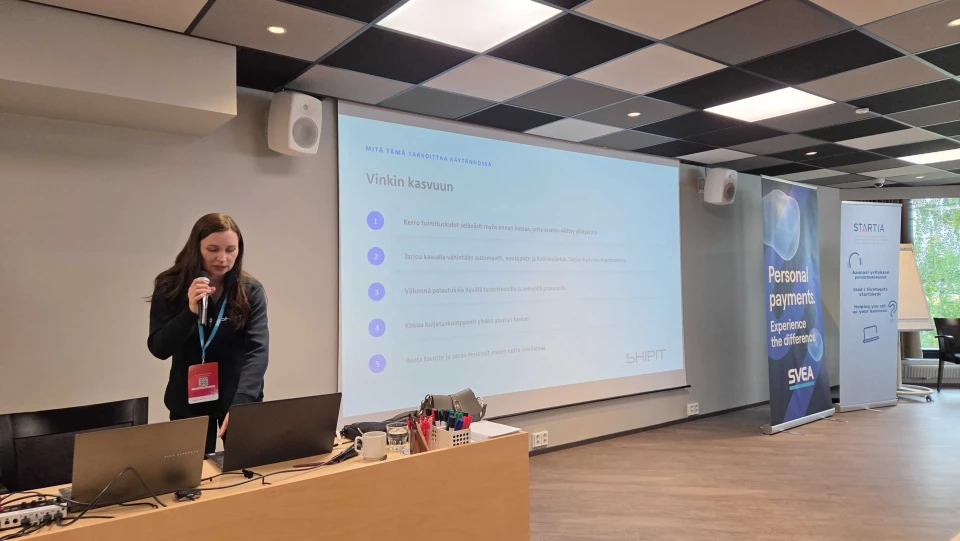
Logistics as a barrier to or an engine of e-commerce growth
- Ida Riikonen, Head of Growth, Shipit
Riikonen stressed that logistics is a promise made to the customer. Delivery costs should be communicated clearly before checkout — for example, via a banner showing the threshold for free shipping. Customers should be offered choices: parcel locker, pickup point and home delivery, ideally from more than one carrier. That also reduces the risk if one shipping company runs into trouble.
Tracking notifications are opened almost every time, she said, calling them an underused marketing channel. For returns, she recommended a digital returns portal. She also mentioned the EU's reform of small-parcel customs handling, which has reduced the flow of cheap imports from China and has therefore been good news for Finnish e-commerce, as well as the packaging regulation, which will require packaging to contain no more than 50% empty space by 2030. She also reminded retailers of the 14-day right of withdrawal. Riikonen encouraged retailers to try selling abroad, since arranging international shipping is now straightforward.
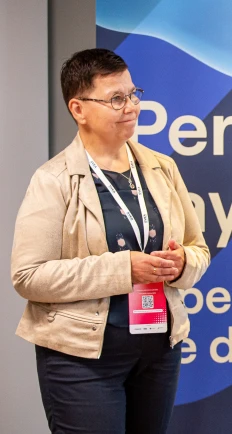
Three steps to governed AI use
- Mari Lintula, Aveo AI
Lintula walked through three steps for AI governance: identifying how AI is being used, agreeing on ground rules, and making sure staff have the right skills. For a small or medium-sized company, she said a few printed pages are enough — a register of tools plus information on who uses them and who's responsible. Risk varies by use case: generating a social media post is a different matter from making business decisions with AI. Ensuring competence, she noted, doesn't mean lengthy training sessions — just walking the whole team through the basics together, something sometimes called "AI literacy." She also highlighted the EU AI Act's transparency requirements, such as informing customers when they're chatting with an AI rather than a person.
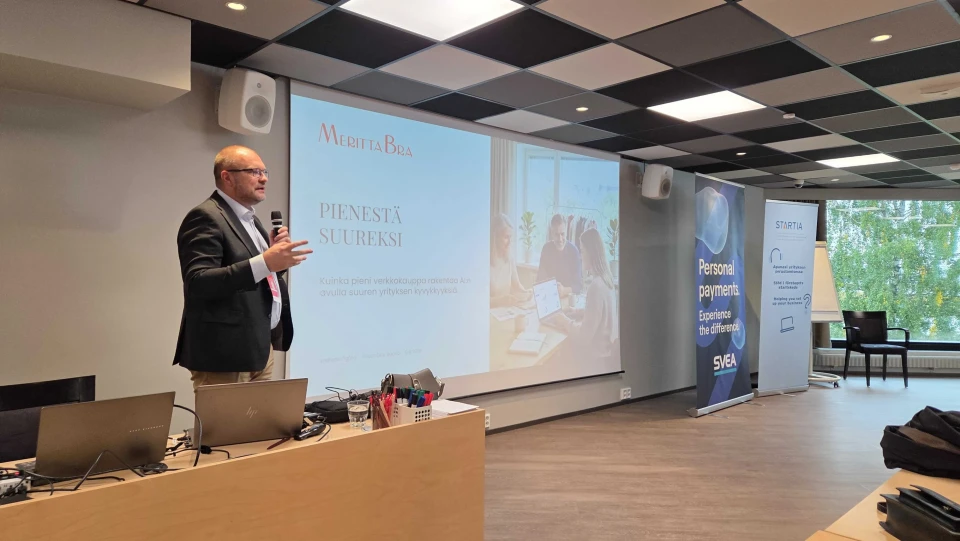
From small to big: AI as a growth engine
- Andreas Ögård, COO, Meritta Bra
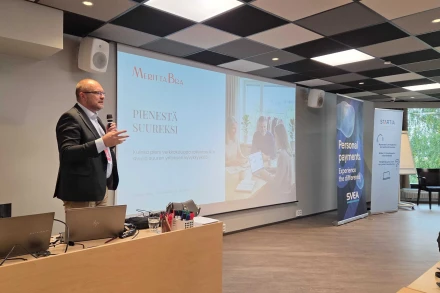
Ögård described how a small family business has adopted AI step by step. It started with a single button on the website, whose code ChatGPT helped write. From there, he began managing Google Ads with Gemini, and now reviews the account with it every Monday. Later came a data warehouse, an in-house checkout system with a loyalty program, and a knowledge layer combining the company's customer service, order and financial data.
Next, he's building a team of AI-driven roles — including a finance director, a data analyst and an operations manager — whose decisions a human signs off on. Responsibility, he said, can never be outsourced to AI: you can't excuse a mistake after the fact by saying "the AI told me to do it." The same AI is available to everyone, he added, but your own data is what gives your business its edge.
Ögård also addressed a common worry: roughly half of Finns believe AI will cause mass unemployment. He answered with Henry Ford's well-known example — that if you'd asked people what they wanted, they would have said faster horses, not a car. In Ögård's view, progress doesn't destroy work, it changes its shape.
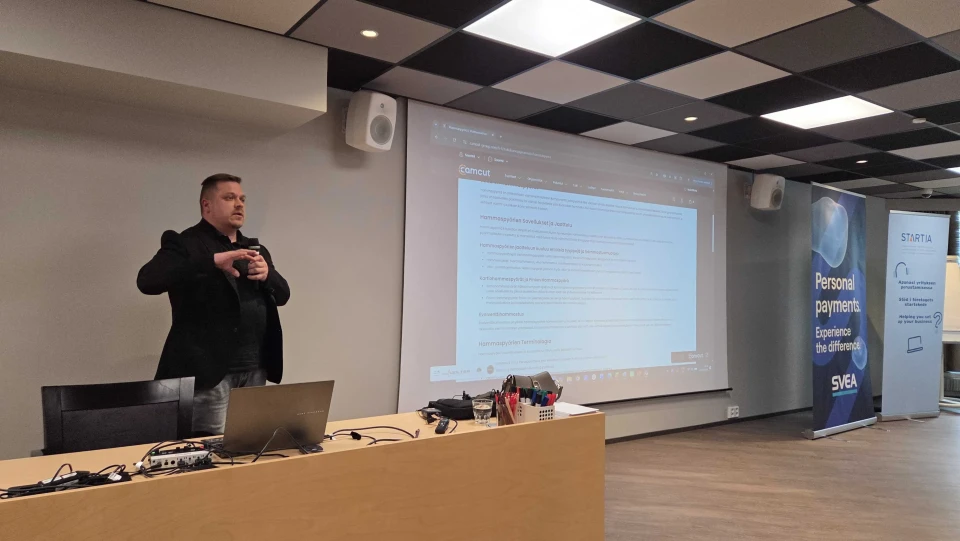
A product catalogue is not enough
- Mikko Vepsäläinen, CEO, Camcut Group
According to Vepsäläinen, content is what determines visibility for a B2B webshop in the technical trade. Camcut Group has been building its webshop with Creamarketing for about 7–8 years, and it now carries tens of thousands of products. The site also includes calculators, tables, guides and a roughly 800-page glossary of industry terms. New content is being added constantly, produced with the help of AI but always checked by a person. The next step is an AI-based chatbot that would offer support around the clock in multiple languages. One challenge is product synonyms — for example, Vepsäläinen said a single measuring tool, a caliper gauge ("rokla"), has around ten different names customers might search for, so search needs to understand all of them. For logged-in customers, products will also be filtered to match their specific machinery.

Workshop: the future of e-commerce
Before the day's closing talk, the audience split into six groups, each given its own question to discuss, and presented its key insight in 60–75 seconds:
- The everyday benefit of AI: translation, ideation and sparring came up most. The customer never sees the AI itself — the end result still has to feel human-to-human.
- Buying in 2028: this group predicted more automation and a faster checkout process — entering card details manually might disappear altogether.
- Are webshops ready for the AI era? Not yet. Data first needs to be high-quality and properly structured.
- The biggest obstacles are the technology and marketing jungle, plus mental fatigue — "brain fry."
- Search: improves when synonyms are supported, helping customers find the right product no matter which term they type.
- There's plenty of data, but companies don't know how to use it. This group pointed to marketing automation and reminders for products that need replacing as concrete examples.
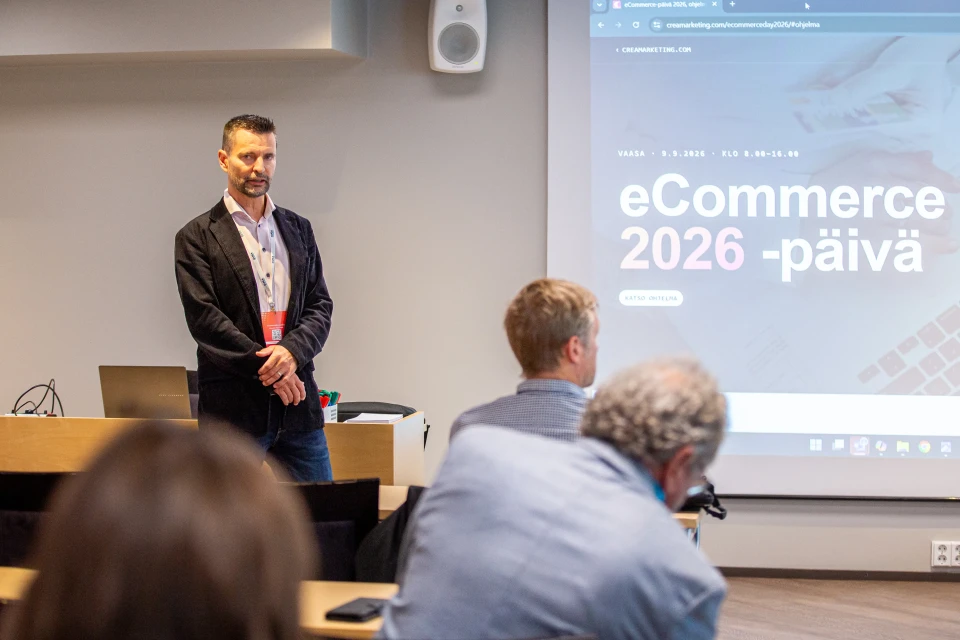
How AI rewrites the rules of online visibility
- Kalle Smeds, CEO, Creamarketing
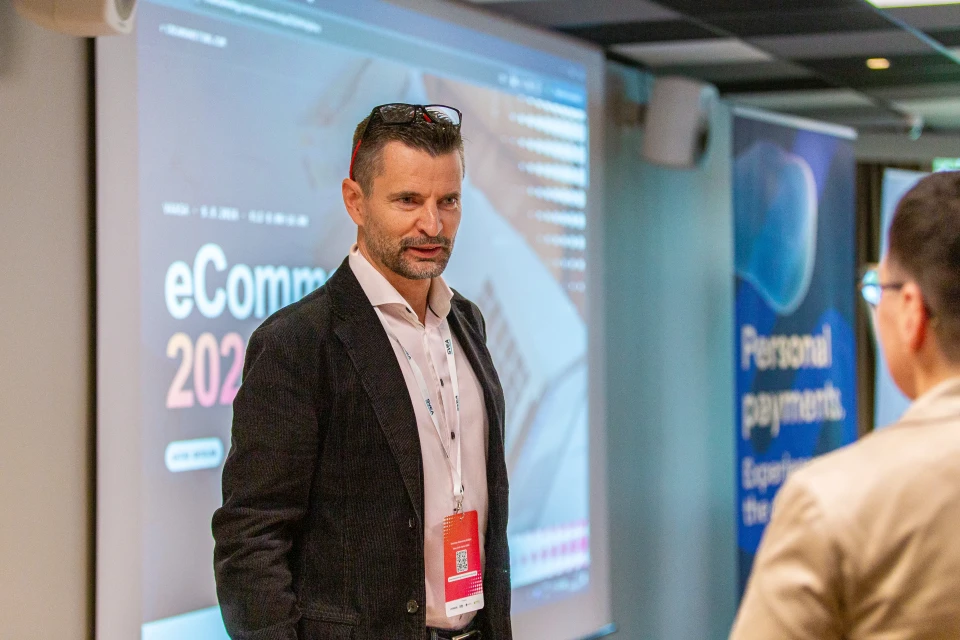
In his closing talk, Smeds described how search behaviour is changing. The traditional path of typing keywords and clicking links is giving way to conversations with AI, with answers appearing directly on the user's screen. Search is also expanding to include images, audio and video, and a personal AI assistant knows the user's history. That means webshops need to be understandable to AI itself: product listings need to state purpose, price, availability and delivery time. His guiding principle: "Fewer clicks, more delegation."
With the help of Niklas Forsdahl, Head Programmer at Creamarketing, Smeds showed a demo of ChatGPT connected to Meritta Bra's new webshop. The AI wrote an article on choosing sports bras, complete with an FAQ section. A human reviewed and published it, after which the AI translated it into Swedish. The whole process took about 10 minutes and cost an estimated 10 cents. Building the integration itself cost around €50 in AI coding credits — a task that, according to Forsdahl, would otherwise have taken three or four days.

E-commerce Day's FAQ about e-commerce and AI
Why do customers abandon their purchase at checkout?
According to Svea's research, the lack of a suitable payment method is the second most common reason. Unexpected delivery costs can also drive buyers away.
What should a webshop do to prepare for agentic buying?
According to Kalle Smeds, product data needs to be high-quality and well-structured. It should clearly show purpose, price, availability and delivery time, with delivery and return terms easy to find.
How can a small business govern its use of AI?
According to Mari Lintula, a small business only needs a few printed pages to govern its AI use: a register of tools, information on users and responsibilities, and agreed ground rules. Staff also need to have basic AI competence confirmed.
Does using your own data with AI require special permission?
According to Anna Häggblom, using your own customer data isn't prohibited under GDPR. That data shouldn't be used to train AI models, and analysis often only requires an email and order number, without names.
Thank you to Ann-Britt Pada of Foto Ann-Britt Pada (fotopada.com) for the day's photos, and to Peter Hellström and Merinova for streaming and recording the event.